
Please find below our draft programme (subject to change)
Elie Beyrouthy, Chair of EPIF and Vice President European Government Affairs, American Express

Maria Luís Albuquerque, Commissioner for Financial Services and the Savings and Investments Union
Derville Rowland, Executive Board Member, Anti-Money Laundering Authority (AMLA)



The legislative process on the revisions to the Payment Services Directive (PSD) and a new Payment Services Regulation is in its final stages. Building on the existing PSD2, the new Regulation puts forward important rules to improve consumer protection and payments security, level the playing field between bank and non-bank payment services providers and strengthen the rules around open banking. The proposal also merges the current E-Money Directive into the PSD. As the negotiations evolve, much of the current discussion is focused on the way payment fraud has adapted over time and how best to address this challenge.
What could a collaborative approach to fighting fraud look like? Can the rules really revamp open banking? What are the expected challenges from merging the licensing regimes? Does the legislation address remaining EU-level supervisory barriers sufficiently? Will the revised framework help reduce the continued dependency of the non-bank payment sector and the infrastructure of commercial banks? How can we make sure the regulatory framework can continue to adapt to new technologies and payment services and products? Should we explore the idea of moving to more outcome-based regulation?





Erik Tak, Head of Product Proposition Division, Director General Market Infrastructure and Payments/Digital Euro, European Central Bank (ECB)

The Anti-Money Laundering Authority (AMLA) took up its work in July 2025. It has taken over the task of delivering a large number of secondary rules under the revised AML framework from the EBA. At the same time, AMLA is preparing to take over its own supervisory powers. Work is also continuing on preparing the large number of secondary legislation under the new AML/CTF framework. Through the directly applicable Regulation, companies should be able to apply a more harmonized approach to their compliance programmes across the EU. We also see the potential for more information exchanges between the industry, with industry and authorities and between authorities.
How do we ensure that a harmonized AML/CTF framework still allows AMLA and individual authorities to apply a risk-based and outcomes-based approach? How does the framework recognize the very diverse nature of non-bank payment providers, their different risks and their ability to deploy very sophisticated risk mitigation techniques? How will the AML/CTF regime interact with other legislation on AI, the eID wallets and the GDPR? How can we ensure Member States will not goldplate the harmonized EU regime?



Member States are poised to agree on their negotiating mandate on the legislation that sets out a legal basis for a potential issuance of the retail digital euro. This proposal covers aspects of the distribution, compensation and functionalities of the digital euro, which will serve as a basis for the digital euro Scheme Rulebook. In parallel, the ECB is developing the 10th iteration of the draft Rulebook that would govern the use of the retail digital euro. Pilot projects are also underway looking at wholesale and other use cases for the digital euro.
What are the main elements under discussion in relation to the enabling legislation? Will this create more competition in the European payment market? Does Europe need its own payment system? How is the timing of the legislative process impacting the work of the ECB? What new use cases, including wholesale market applications, can we expect in the near future? How do we ensure the digital euro can also in future compete with new market innovations, such as stablecoins? How can the non-bank payment industry contribute to the acceptance of the digital euro?

José Manuel Campa, Chairman, European Banking Authority (EBA)
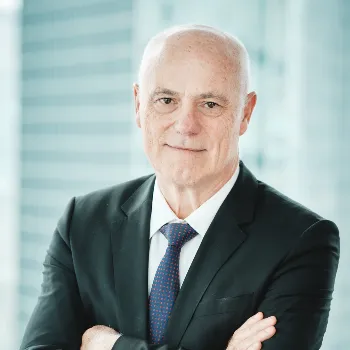
Elie Beyrouthy, Chair of EPIF and Vice President European Government Affairs, American Express